
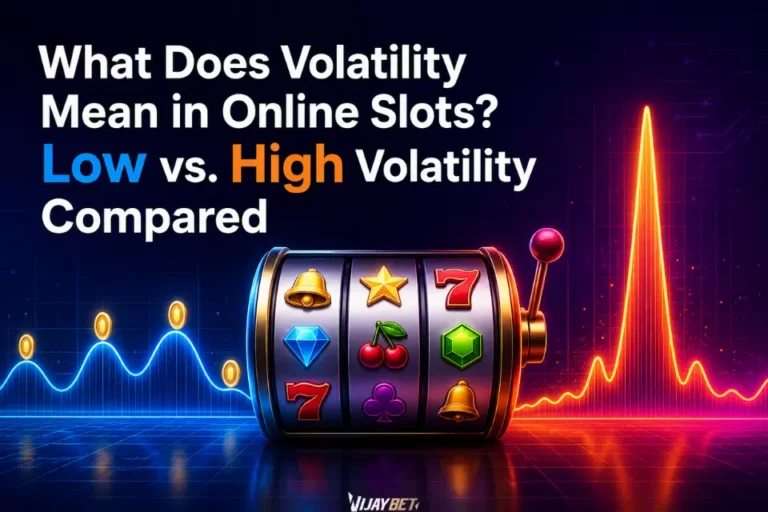
Some online Slots produce small results regularly, while others can go through many quiet spins before showing a larger payout. This difference is mainly shaped by volatility.
In simple terms, volatility shows how a Slot tends to deliver its results. Some games return smaller amounts regularly, while others place more of their potential value in a few less frequent spins or bonus rounds. That difference affects how quickly the balance moves and how the game feels to play.
For Indian players comparing online Slots, understanding low, medium and high volatility makes it easier to choose a game with a suitable pace. Players who are unfamiliar with the basics can first read how reels, RTP and bonus features work.
Why Can Two Slots Feel Completely Different?
The clearest difference is often how quickly the balance changes. One Slot may keep returning small amounts, while another can remain quiet for several spins. The reels may look similar, but the result pattern can create a completely different session.
Some Slots Pay Small Amounts Often, Others Make Players Wait
Low-volatility Slots tend to produce smaller results more regularly. High-volatility games can have longer quiet periods, with more of their potential value concentrated in fewer outcomes. Medium-volatility titles sit somewhere between the two.
These labels describe the general pattern across a large number of spins. A short session does not have to follow that pattern neatly, so volatility should be treated as a guide rather than a script.
A Losing Run Does Not Make a Win Due
After several quiet spins, it is easy to feel that the game must be close to paying. Slots do not work that way. A game does not owe the player a win simply because nothing meaningful has appeared recently.
Volatility describes the overall playing pattern; it does not predict the next result. Previous wins, losses or bonus rounds do not change what must happen on the following spin.
The Same Stake Can Create a Different Session
Take a player with ₹500 who stakes ₹5 per spin. In a low-volatility Slot, several small returns may keep the balance moving gradually. In a high-volatility game, the same ₹500 can disappear faster during a long quiet run.
Nothing has changed about the stake or starting balance. The difference comes from how each game spreads its results.
How Do Low-Volatility Slots Work?
Low Volatility Slots are generally built around frequent reel activity and a more limited payout range. They may suit players who prefer regular combinations instead of waiting for one rare high-value feature.
Small Results Can Still Reduce the Balance
A Slot can celebrate a result even when it returns less than the original stake. A ₹10 spin that pays ₹4 may trigger flashing lights and sound effects, but the balance is still ₹6 lower.
This is why the number of winning animations can be misleading. The balance tells the more useful story. A game may display several small wins while the total amount continues to fall.
Lower Volatility Does Not Mean Lower Risk
Smaller combinations appearing more often can make the balance movement look steadier. In some sessions, this may allow the same amount to support more spins than it would in a highly volatile game.
However, a steadier pace does not stop the balance from falling. Frequent small results can even make it easier to overlook how much has been spent across the full session.
A Steadier Pace May Suit Some Players
Players who dislike waiting through long quiet periods may find low-volatility Slots easier to follow. Regular combinations keep the reels active, and the session is less dependent on one rare bonus feature.
Someone trying a new game can also use demo mode to see how its paylines, symbols and features behave. Demo play is useful for learning the rules, although it cannot predict future results.
Why Do High-Volatility Slots Feel More Unpredictable?
High Volatility Slots place more of their potential value in less frequent outcomes. This creates longer gaps between meaningful results and can cause the balance to change more sharply.
Quiet Periods Can Use the Balance Quickly
In a high-volatility Slot, small combinations may appear while the balance continues to fall. The more noticeable results are often concentrated in fewer spins, which can leave long periods with little activity.
This uneven pace is part of what makes high-volatility games feel more dramatic. It also makes chasing a previous loss particularly risky, especially if the player begins increasing the stake during a quiet run.
Maximum Win Does Not Show the Full Picture
The maximum win is usually the biggest number displayed in the game lobby, but it leaves out an important detail: how difficult that result may be to reach.
A 10,000x ceiling shows what is possible under the paytable, not what an ordinary session is likely to produce. Before choosing a game, it makes more sense to consider its volatility and feature structure alongside the maximum multiplier.
The Bonus Is Not “Getting Closer”
A bonus does not move closer simply because it has not appeared for a while. Continuing the session, changing the stake or restarting the game does not force the feature to arrive.
When a player keeps spinning only because the Bonus Round feels “due,” the decision is based on previous results rather than the available balance. That is often when a planned entertainment session turns into chasing losses.
Where Do Medium-Volatility Slots Fit?
Players who do not want constant small returns or long empty stretches often look towards medium-volatility Slots. These games usually keep some activity in the base game while leaving room for larger combinations and bonus features.
Medium Is a Broad Category
Medium volatility sounds precise, but it covers a wide range of games. One title may lean towards frequent base-game results, while another relies more heavily on its Free Spins or Bonus Round.
For this reason, two medium-volatility Slots may not produce the same playing experience. The label provides a starting point, but the paytable and feature structure offer a clearer picture.
Providers Do Not Use One Rating System
There is no universal volatility scale across Slot providers. One studio may use three levels, while another uses five bars or its own internal rating. As a result, two games labelled “medium” may not feel equally balanced.
If the rating is not clearly displayed, players can look at the maximum win, size of regular payouts and importance of the bonus feature. A game that places most of its value in a rare Bonus Round will usually feel more volatile than one with stronger base-game combinations.
Medium Still Does Not Mean Predictable
A medium rating does not guarantee an even mix of small and large results. It also does not mean a certain number of winning combinations must appear within 20, 50 or 100 spins.
The game may have a balanced long-term design while one short session remains unusually active or quiet. Random variation is still present at every volatility level.
What Is the Difference Between RTP and Volatility?
RTP and volatility often appear together in game reviews, but they describe different parts of the experience. RTP answers, “How much may return over the long run?” Volatility answers, “How might those results arrive?”
RTP Is a Long-Term Figure
Return to Player, or RTP, is the theoretical percentage a game returns across a very large number of spins. A Slot with 96% RTP is designed to return an average of ₹96 for every ₹100 wagered over the long term.
A 96% RTP is not a promise that ₹100 will become ₹96 after one session. The figure is calculated across a huge number of spins, so one player’s short-term result can land far above or below it.
The Same RTP Can Feel Very Different
Put two Slots with the same 96% RTP side by side and they may feel nothing alike. One can return small amounts regularly, while the other may place much of its potential value inside an occasional feature.
RTP shows the theoretical percentage returned over the long run, but it does not reveal how those results are distributed. This is why two games with the same RTP can create very different playing experiences.
RTP and Volatility Work Better Together
A high RTP does not automatically make a game low volatility. In the same way, a low-volatility rating does not mean the Slot has a higher RTP.Looking at RTP, volatility, maximum win and bonus structure together gives a more useful picture than relying on one number.
| Comparison | Low volatility | Medium volatility | High volatility |
| Result frequency | Generally more frequent | Moderately frequent | Usually less frequent |
| Typical result size | Smaller | Mixed | Potentially larger |
| Balance movement | More gradual | Moderate | Can change quickly |
| Quiet periods | Usually shorter | Moderate | May be longer |
| Playing style | Steadier activity | Balanced pace | Greater variation |
| Guaranteed profit | No | No | No |
Which Volatility Level Should Indian Players Choose?
There is no need to search for the “best” volatility level. Some players enjoy regular small combinations, while others are comfortable with longer quiet periods. A more practical approach is to check how many spins the available balance can support and whether the game’s pace feels manageable.
Start with the Balance, Not the Maximum Win
The maximum win may catch the eye, but the available balance matters more during an actual session. Before starting, work out roughly how many spins the selected stake allows.
For example, a ₹20 stake will use a ₹500 balance much faster than a ₹5 stake. If only a small number of spins are available, a high-volatility game can end the session before its main feature appears. Lowering the stake may extend the session, but it does not improve the odds.
Check the Game Information and Demo Mode
Volatility may be shown inside the paytable, help menu or game information screen. If no official rating is available, the maximum win, regular payout values and feature structure may offer useful clues.
Demo mode can show whether the base game feels active and explain how Wilds, Multipliers or Free Spins work. It cannot reveal what will happen later, but it can help players decide whether they enjoy the pace before using money.
Choose the Pace, Not the Promise
Volatility is not a shortcut to better results. It simply shows how a game tends to distribute its outcomes. Low volatility may suit players who prefer regular activity, while high volatility usually brings longer quiet periods and sharper balance changes.
Indian players should treat Slots as entertainment, follow the rules in their location and set a clear limit before the first spin. Checking the game information and choosing a comfortable pace is more practical than focusing only on the largest multiplier. For more information about Slots, paylines and bonus features, stay connected with Vijaybet.
Slots Volatility FAQs
Q1:Is high volatility better than low volatility?
No. High volatility offers a wider range of potential outcomes but usually comes with longer quiet periods. Low volatility tends to produce smaller results more regularly. Neither type guarantees a better final result.
Q2:Are low-volatility Slots better for beginners?
They may be easier to follow because regular combinations tend to appear more often. However, demo mode remains the better way to understand a new Slot before using money.
Q3:Can two Slots have the same RTP but different volatility?
Yes. Two games can share the same RTP while spreading their theoretical returns differently. One may deliver regular small results, while the other relies more heavily on occasional high-value features.
Q4:How can players find a Slot’s volatility?
Check the paytable, help menu or provider information shown inside the game. Reviews may provide an estimated rating, but the official game information should be given priority.
Q5:Do high-volatility Slots pay after a long losing run?
Not necessarily. A long quiet period does not force the next spin to produce a win or Bonus Round. Previous results do not make the game owe the player a payout.